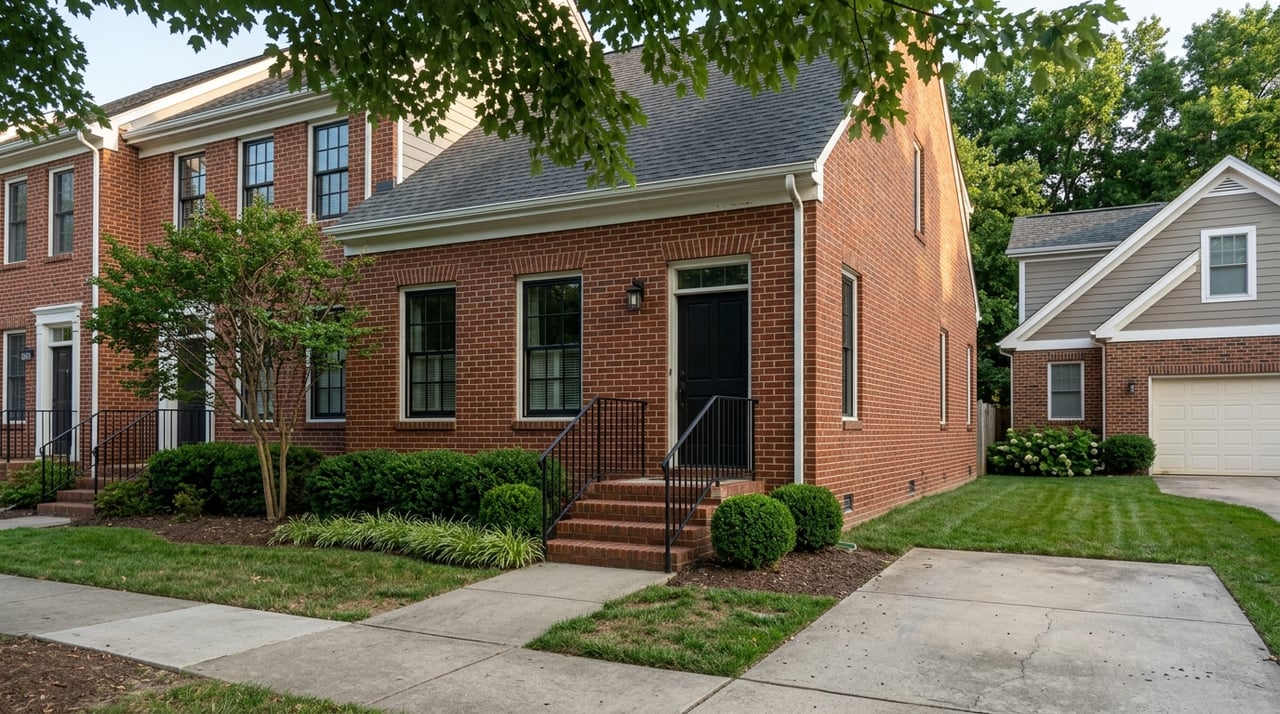
Buying in Fairfax often comes down to one big question: should you stretch for a single-family home or stay flexible with a townhome? If you are weighing both, you are not alone. In Fairfax County, both property types remain in demand, prices are still rising modestly, and buyers are trying to balance budget, commute, maintenance, and long-term plans. This guide will help you compare the real trade-offs so you can make a choice that fits how you want to live. Let’s dive in.
Start With Fairfax County
When people say “Fairfax,” they may mean Fairfax County or the City of Fairfax, and that distinction matters for market data. The figures in this article refer to Fairfax County, because regional reporting often tracks Fairfax County and the City of Fairfax separately, as noted by NVAR.
That matters because your budget, taxes, commute options, and school assignment research all depend on the exact jurisdiction and address. If you are comparing homes, it is smart to evaluate each property at the parcel level instead of relying on broad assumptions.
Compare Price First
For many buyers, the biggest difference between a townhome and a single-family home in Fairfax County is the entry price. NVAR’s 2025 Fairfax County forecast placed detached homes at $956,916 and townhomes at $627,461 by December 2025, a gap of $329,455, or about 52.5% before HOA dues and other carrying costs, according to the NVAR forecast update.
That gap can shape everything else in your search. A townhome budget may let you buy in a more convenient location, keep more cash in reserve, or reduce monthly pressure. A single-family purchase may give you more private space, but it often requires a much bigger upfront and ongoing financial commitment.
What the market says now
Northern Virginia remains competitive, but the pace is more measured than in the most frenzied years. In March 2026, NVAR reported a regional median sold price of $760,000, average days on market of 25, and 1.39 months of supply.
For Fairfax County specifically, the 2026 forecast points to modest appreciation in both categories. Single-family prices are expected to rise 1.9% and townhome median prices 1.7%, while inventory is expected to increase for both, based on NVAR’s 2026 economic and market forecast.
Look Beyond the Mortgage
The purchase price is only part of the story. Your true monthly cost depends on taxes, insurance, utilities, maintenance, and in many townhome communities, HOA dues.
At Fairfax County’s adopted base tax rate of $1.1225 per $100 of assessed value, those benchmark prices imply about $7,043 per year in county tax for the townhome example and about $10,741 per year for the detached home example, before special district charges or exemptions, according to Fairfax County’s FY2026 adopted budget overview. Fairfax County also notes that actual rates can vary by parcel and district.
HOA dues can change the math
Townhomes often look more affordable at first glance, but HOA dues can materially affect your monthly budget. The Consumer Financial Protection Bureau says HOA dues are usually paid separately from the mortgage payment, and fees can range from a few hundred dollars a month to more than $1,000.
That means a lower purchase price does not automatically equal a lower all-in housing cost. When you compare homes, calculate principal, interest, taxes, insurance, and HOA dues together so you are looking at the real number.
Weigh Space and Privacy
If lifestyle is driving your decision, this is where the trade-off becomes personal. In practical terms, townhomes usually mean less privacy and less yard space, while detached homes usually offer more autonomy, more outdoor area, and more flexibility for future additions. That trade-off is a reasonable inference from property type and HOA structure, supported in part by the CFPB’s guidance on community association ownership and fees.
For some buyers, that extra private space is worth the premium. If you want more separation from neighbors, a bigger yard, or a property where you have more control over changes and upkeep, a single-family home may fit your goals better.
Why smaller-lot living can still work well
A townhome lifestyle can make a lot of sense in Fairfax County because you are not limited to your own yard for outdoor time. The Fairfax County Park Authority manages 420 parks across more than 23,000 acres, and the trail system covers more than 334 miles. The 41.5-mile Cross County Trail links Great Falls to Lorton.
If you care more about easy access to recreation than maintaining private acreage, that public outdoor network can make a townhome feel like a smart trade. You may give up some yard space, but gain time, convenience, and access to well-used public amenities.
Think About Maintenance
Your tolerance for home maintenance should play a bigger role than many buyers expect. A detached home often means more exterior work, more yard care, and more responsibility for repairs over time.
A townhome may reduce some of that burden, especially in communities where exterior maintenance or common-area upkeep is handled collectively. That does not mean maintenance disappears, but it can be more manageable if you prefer a lower-upkeep routine.
Compare Commute Convenience
In Fairfax County, commute patterns can be just as important as square footage. Buyers who want shorter or simpler commuting options often prioritize access to transit and major routes over having the largest lot.
Fairfax County says commuters can use Metro, VRE, Fairfax Connector, free park-and-ride lots, and commuter garages. The county also notes there are more than 100 bus routes and five VRE stations, while the City of Fairfax operates CUE Bus, according to Fairfax County Commuter Services.
Why townhomes often win on location
Townhomes are often positioned in places that make daily travel easier, especially if your goal is to stay closer to transit, commercial centers, or established road networks. That does not mean every townhome will beat every detached home on commute, but it does mean you should compare location efficiency just as carefully as square footage.
If your top priority is time savings during the week, a townhome in a better-connected location may deliver more value to your daily life than a larger detached home farther out.
Don’t Assume Anything About Schools
A common buyer question is whether home type affects school assignment. In Fairfax County, the important factor is the address, not whether the property is a townhome or a detached home.
Fairfax County Public Schools assigns schools based on address, and boundaries can change. That is why buyers should verify each property using the official FCPS boundary locator instead of assuming a specific home type has better or worse school access.
This is an important step no matter what you buy. If school assignment is part of your search, confirm it early and at the parcel level.
What Inventory Means for Buyers
You may have a little more choice in 2026 than buyers had in earlier tight-market periods. NVAR’s forecast expects Fairfax County townhome inventory to rise 30.4% and single-family inventory to rise 35.8%, while prices rise only modestly, according to the 2026 forecast.
NVAR has also noted that detached inventory remained relatively stable while much of the inventory growth showed up in attached housing, which can give townhome shoppers somewhat more options in a still-competitive market, based on NVAR’s inventory analysis.
That does not mean buyers can relax completely. It does mean you may have a better chance to compare trade-offs carefully instead of rushing into the first available option.
When a Townhome Makes Sense
A townhome may be the better fit if you want:
- A lower entry price than a detached home
- More manageable exterior upkeep
- Better odds of finding something near transit or commuter routes
- Access to community features and shared maintenance structures
- More room in your budget for savings, updates, or other priorities
NVAR’s Fairfax County forecast has specifically noted that townhome demand should remain strong because of relative affordability versus single-family homes, as shown in the Fairfax County housing forecast.
When a Single-Family Home Makes Sense
A detached home may be the better choice if you want:
- More privacy from neighboring homes
- More yard space and outdoor flexibility
- More room for future additions or layout changes
- Greater separation between indoor and outdoor living areas
- More control over the property without community HOA constraints
That higher price does not mean detached homes are a poor investment. Fairfax County’s FY2026 assessment cycle showed single-family values rising 6.38%, which points to continued support for the segment, according to Fairfax County’s FY2026 assessment and budget materials.
A Simple Way to Decide
If you are stuck between the two, ask yourself where you want to place the premium. Do you want to spend more for private space, yard, and flexibility, or would you rather direct some of that budget toward location, transit access, parks, and lower maintenance?
In Fairfax County, both paths can work well. The better choice is usually the one that matches your commute, your full monthly budget, and how much home and yard upkeep you actually want to own.
If you want help comparing options in Fairfax County with real numbers and a strategy built around your priorities, connect with Robert T Dinh. You will get practical guidance, data-driven advice, and a clear plan for choosing the home type that fits you best.
FAQs
Is a townhome or single-family home cheaper in Fairfax County?
- In Fairfax County, townhomes generally have a lower entry price than detached homes. NVAR’s 2025 benchmark showed a gap of about $329,455 between the two property types before HOA dues and other carrying costs.
Do HOA dues matter when comparing a Fairfax County townhome to a detached home?
- Yes. HOA dues can significantly change your real monthly cost, and the CFPB says they are usually paid separately from your mortgage payment.
Does home type affect FCPS school assignment in Fairfax County?
- No. FCPS school assignment is based on address, and buyers should verify each property using the official boundary locator.
Is a single-family home worth the higher price in Fairfax County?
- It can be, especially if you value more privacy, yard space, and long-term flexibility. The right answer depends on your budget, lifestyle, and maintenance preferences.
Are townhomes easier for commuting in Fairfax County?
- They often can be, because many townhomes are located closer to transit, commuter routes, and activity centers. You should compare each property’s actual location rather than assume every townhome is more convenient.
Is 2026 a better time to compare both home types in Fairfax County?
- Buyers may have more options than before, since NVAR expects inventory to increase in both townhome and single-family segments while price growth remains modest.