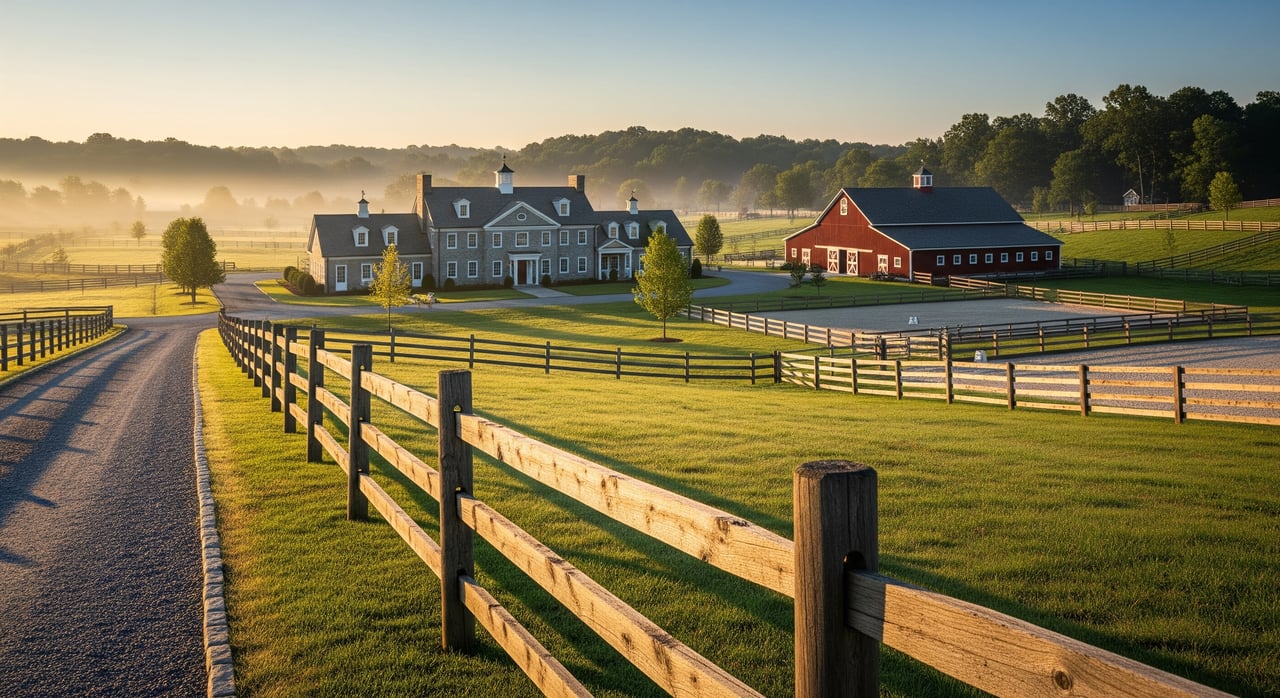
Dreaming of riding from your own backyard in Laytonsville? You are not alone. Northern Montgomery County blends rural character with real access to services, which makes it a smart place to keep horses. In this guide, you will learn the key rules, property features, and due diligence steps to buy with confidence. Let’s dive in.
Why Laytonsville works for horses
Laytonsville sits in northern Montgomery County where large-lot homes and preserved farmland create room for barns, arenas, and pasture. The county’s Agricultural Reserve and conservation programs protect rural land and its equine culture. As a buyer, you benefit from open space and proximity to vets, feed, and major roads. You also need to understand how land-use rules shape what you can build and operate.
Property types you will see
- Small rural residential lots with a barn and pasture for private use, often ideal for one to three horses.
- Larger working farms with hay fields, multiple paddocks, and outbuildings that can support more horses, breeding, or light boarding.
- Properties under conservation easement or enrolled in agricultural programs that may limit subdivision or future development.
- Former hobby farms converted to residential use where you should verify past land use and any remaining agricultural commitments.
Zoning and land-use checks
Confirm permitted uses
Before you fall in love with a property, verify the zoning with Montgomery County Planning. Confirm the number and type of animals allowed, whether commercial boarding or training is permitted, and any site-plan needs. Ask about setbacks and placement rules for barns, arenas, and manure storage.
Agricultural Reserve and easements
If the property lies in the Agricultural Reserve or has a recorded conservation easement, future construction and subdivision may be limited. Confirm any Purchase of Development Rights or easement language in the chain of title. These designations can protect open land while affecting your long-term plans.
Setbacks and accessory structures
Most equine structures count as accessory buildings and follow placement rules. Clarify requirements for stables, hay or equipment sheds, and manure storage. Indoor arenas and large storage structures often carry stricter review.
If you plan to board or train
Boarding, lessons, or training for hire can trigger business licensing and different zoning standards. Commercial uses may require more parking, bathrooms or septic capacity, and nutrient-management plans. Confirm policies up front so your business model works on day one.
Permits and environmental rules
Building permits and code compliance
Barns, indoor arenas, significant fencing runs, and manure storage structures typically need permits and inspections through Montgomery County’s Department of Permitting Services. Electrical work, wells and septic upgrades, and grading also require approvals. Ring construction and site drainage can fall under stormwater rules.
Waterways, buffers, and Chesapeake Bay rules
Mapped wetlands and stream buffers restrict where you can place structures and manure storage. Maryland’s Chesapeake Bay protection standards influence how you manage runoff and nutrients, especially on commercial-scale operations. Keep manure and arena runoff out of protected buffers and discuss any needed controls during permitting.
Septic systems and wastewater
Septic capacity matters for homes and barns, especially if staff or customers will use restrooms. Upgrades may require soils and percolation testing and permits. Know where the septic system sits so it does not conflict with barn or arena locations.
Land, pasture, and water due diligence
Pasture and soils
Usable pasture is what counts, not just total acreage. Plan acreage by the number of horses, pasture quality, and whether you will bring in hay instead of grazing. Review soil maps and limits, since well-drained soils reduce mud, hoof issues, and arena costs.
Drainage and topography
Gentle slopes help with drainage. Steep slopes or flood-prone lowlands reduce usable acreage and complicate ring placement. Walk the property after rain if possible to spot wet areas.
Water supply
On rural wells, test water quality and confirm pump capacity. Multiple horses plus household use can strain a weak well. Streams and ponds can be supplemental water sources, but expect environmental limits and seasonal variability.
Septic and wastewater
Confirm system permits, age, and condition. Map out the drain field and reserve area so you do not plan a barn or arena on top of it. Factor future restrooms or wash racks into capacity planning.
Barns, fencing, and arenas
Barn safety and function
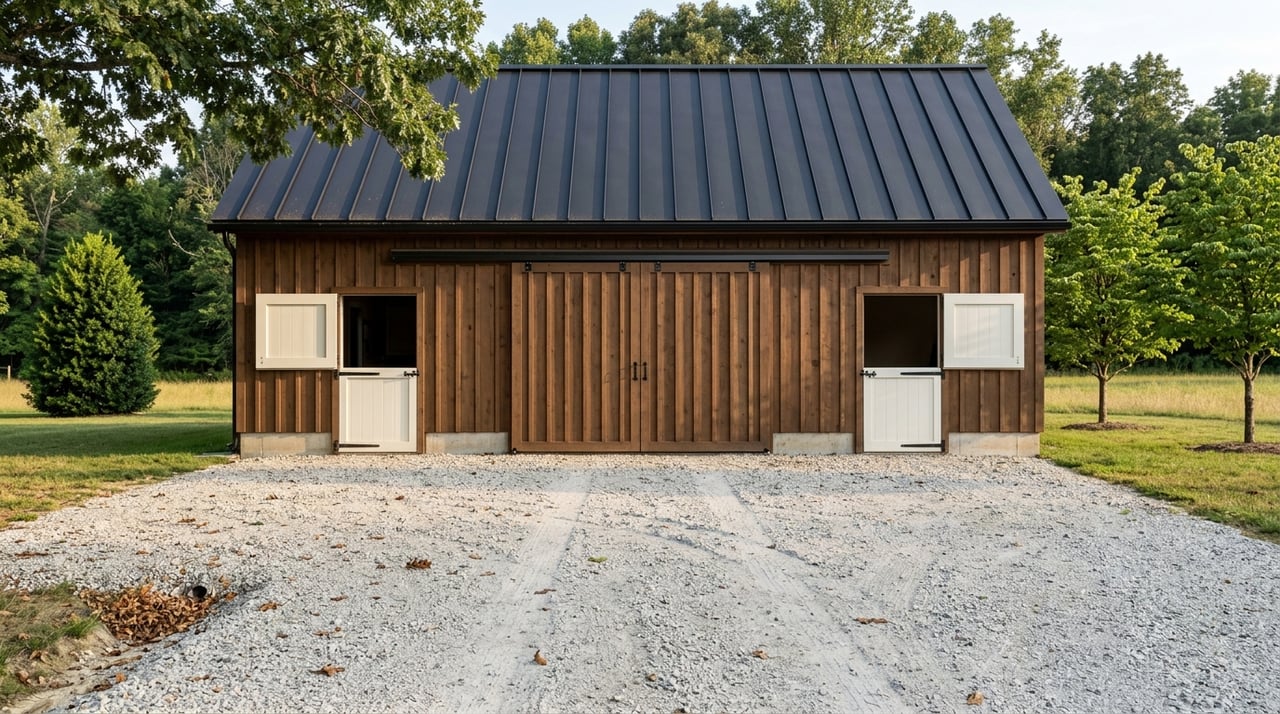
Have barns and outbuildings inspected for structural integrity, roof condition, posts, floors, and ventilation. Check stall sizes and airflow for your intended use, such as broodmares or training. Inspect electrical systems and exits with fire safety in mind.
Manure management
Confirm a safe, accessible location for manure storage and composting that avoids streams and buffers. Assess capacity, access for removal, and runoff control. Good layout reduces costs and neighbor concerns.
Fencing and paddocks
Inspect fence type and condition, including posts, gates, and safe visibility for horses. Rotational grazing works best with functional cross-fencing and reliable water access in each paddock. Budget for repairs or replacement if boards are loose or wire is unsafe.
Arenas and drainage
Footing and drainage are expensive to fix. Ask about base layers, footing composition, and how water moves through and around the ring. Poor siting can lead to chronic water problems.
Access, logistics, and services
- Test road access and gate width for trailers, hay trucks, and emergency vehicles.
- Confirm reliable electric to the barn, propane delivery access, and workable internet and phone service.
- Map proximity to veterinarians, equine hospitals, farriers, feed suppliers, and training centers.
Financing, insurance, and costs
- Financing: Some lenders undervalue barns or view large lots differently. Seek lenders familiar with rural or agricultural properties, including Farm Credit-style options. Conservation easements or unpermitted structures can affect loan approval.
- Ongoing costs: Budget for fencing and pasture care, hay and feed, vet and farrier, utilities, and labor. Plan for capital projects like new fencing, arena builds, or driveway upgrades.
- Insurance: Standard homeowners policies may not cover barn structures or equine liability. Consider farmowner’s coverage, equine liability insurance, and horse mortality or medical policies, especially for higher-value animals or public activities.
Your pre-offer and inspection checklist
- Verify zoning, permitted uses, and setbacks for barns, arenas, and manure storage.
- Check whether the property is in the Agricultural Reserve or under a conservation easement.
- Review well logs, water quality tests, and pump capacity.
- Confirm septic permits, system location, and capacity for your plans.
- Obtain seller disclosures on animal use, manure management, and any structural issues.
- Order inspections for barns and outbuildings, including structural, roof, and electrical.
- Schedule well flow and water quality testing and a septic evaluation or perc test if needed.
- Review soils and drainage for pasture and arena feasibility.
- Screen for wetlands, floodplain, and stream buffers.
- Consider an equine consultant to evaluate fencing safety, arena footing, and pasture management.
Planning a business on-site
- Confirm boarding, training, or lessons are allowed under current zoning.
- Clarify any site-plan needs, parking, bathrooms, and septic capacity for customers.
- If buying an existing operation, review past financials, hay procurement, manure disposal, and client contracts.
- Align insurance and liability coverage with your services.
Lifestyle and community checks
- Drive local roads with a trailer to test turning, visibility, and winter plowing patterns.
- Talk with neighbors about water availability, historic field use, and any shared trail or road agreements.
- List emergency care and routine service providers within practical response times.
How The Dinh Team supports your search
You deserve a local advocate who understands rural Montgomery County and the details that equestrian properties demand. The Dinh Team pairs deep neighborhood knowledge with a process that reduces risk and keeps your goals front and center. Here is how we help:
- Targeted search for acreage, barns, and arena potential in and around Laytonsville.
- Upfront zoning and use checks, plus coordination with county offices and your chosen professionals.
- Introductions to local inspectors, well and septic pros, and equine-savvy contractors.
- Data-informed pricing and negotiation to protect your budget and timeline.
- Smooth coordination from offer to close so you can focus on the horses.
Ready to walk properties that fit your wish list? Connect with Robert T Dinh for local guidance tailored to your equestrian goals.
FAQs
How many acres do I need for horses in Laytonsville?
- There is no single number; plan for usable pasture based on horse count, soil productivity, and whether you will rely on grazing or bring in hay.
Are barns and indoor arenas permitted in Montgomery County?
- Many equine structures are allowed but usually require permits, setbacks, and compliance with electrical and stormwater rules; confirm with county permitting before planning.
What is the Montgomery County Agricultural Reserve?
- It is a large protected rural area where policies preserve farmland and may limit subdivision or certain development, which can shape how you use or improve a property.
What environmental rules affect manure and runoff?
- Wetland and stream buffers restrict placement, and statewide Chesapeake Bay protections influence nutrient and runoff management, especially for commercial operations.
Can I run a boarding or training business from a Laytonsville property?
- Only if zoning allows it and you meet site, septic, parking, and business requirements; verify early to avoid costly changes later.
What inspections should I budget for when buying a horse property?
- Plan for barn and outbuilding inspections, well flow and water quality tests, septic evaluation, soils review, and, if needed, an equine consultant for fencing and arenas.