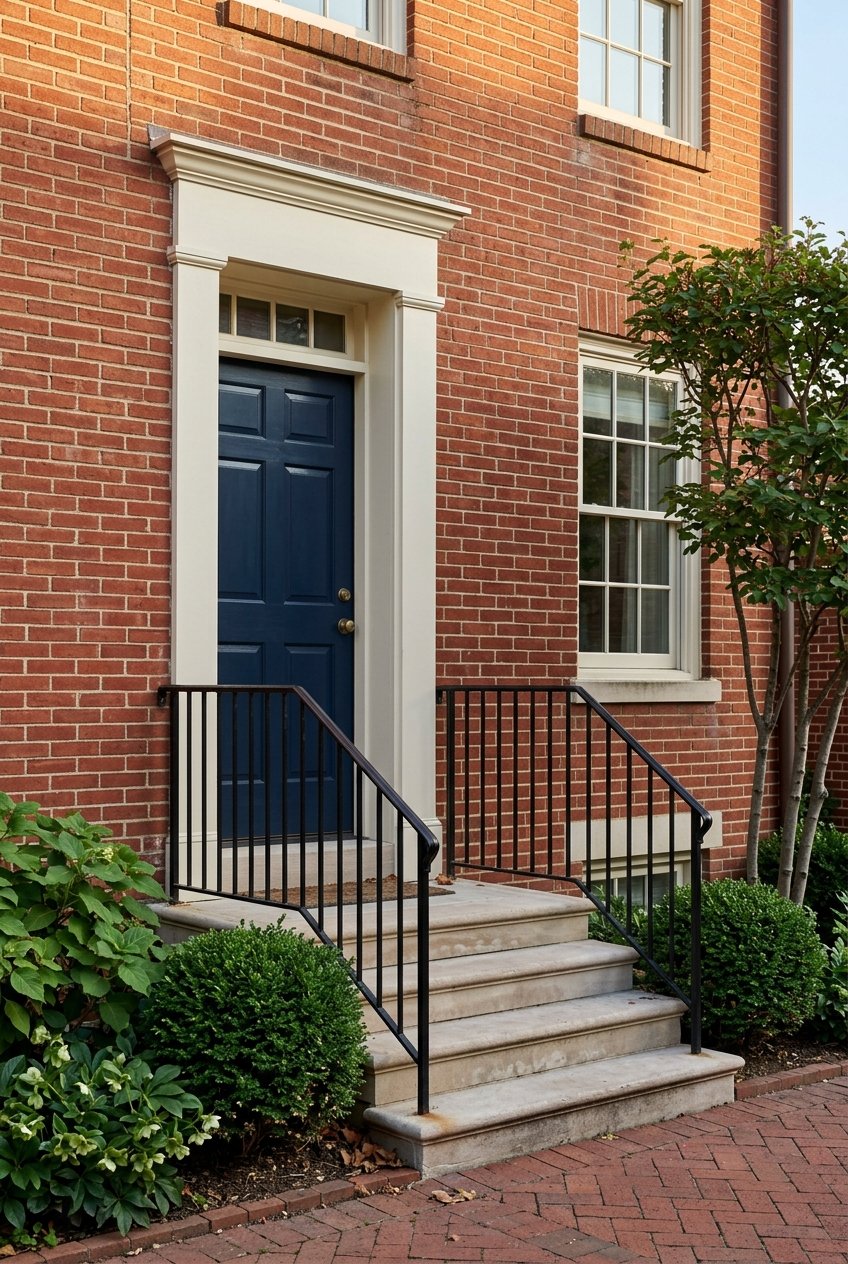
Buying in Washington, DC can feel exciting until every neighborhood starts to look good on paper. One area seems perfect for your commute, another fits your budget better, and a third has the home style you actually want. The good news is that you do not need to guess. If you compare neighborhoods the right way, you can narrow your search with more confidence and less stress. Let’s dive in.
Start With Monthly Cost
A lot of buyers begin with the list price, but in DC, your monthly payment is the better place to start. Redfin’s March 2026 market snapshot puts the median sale price in the District at $677,000, which gives you a useful citywide benchmark.
That number matters, but it is only part of the story. Two homes with the same asking price can lead to very different monthly costs once you add property taxes, condo or HOA fees, insurance, maintenance, and parking.
DC property taxes are also worth factoring in early. The current residential property tax rate is $0.85 per $100 of assessed value, and the homestead deduction reduces assessed value by $91,950 for qualifying owner-occupied principal residences in tax year 2026.
If you are choosing between a condo, rowhouse, or detached home, this step helps you compare options more clearly. Instead of asking, “What is the highest price I can offer?” ask, “What monthly payment still feels comfortable after all ownership costs are included?”
Prioritize Your Daily Routine
The right neighborhood is not always the one with the most buzz. It is usually the one that fits how you actually live day to day.
Start with your commute. If you plan to use Metro, check the walk from the specific property to the actual station entrance, not just whether the listing says it is “near Metro.” In DC, a neighborhood label can cover a wider area than you expect.
Amenities matter too, but think in practical terms. Ask yourself where you want easy access to parks, grocery options, restaurants, trails, or major destinations you visit often.
DC Neighborhoods With Strong Transit Access
Several DC neighborhoods stand out for rail access and nearby destinations:
- Capitol Hill: Eastern Market and Capitol South are on the Orange, Silver, and Blue lines. WMATA notes access to historic Capitol Hill, Nationals Park, and The Yards area.
- Navy Yard: Navy Yard-Ballpark is on the Green Line and serves Nationals Park and Yards Park.
- Cardozo / Shaw: Shaw-Howard U is on the Yellow and Green lines, with pedestrian access from Georgia Avenue to the Howard University campus.
- Columbia Heights: Columbia Heights station sits in the 14th Street corridor and is within walking distance of shopping, local eateries, Mt. Pleasant, and Adams Morgan.
- Brookland: Brookland-CUA is on the Red Line, on the Catholic University campus, next to the Basilica, and offers Metrobus connections to Washington Hospital Center.
- NoMa: NoMa-Gallaudet U is on the Red Line and connects to the Metropolitan Branch Trail, Union Market, and Gallaudet University.
- Cleveland Park: Cleveland Park station serves upper Connecticut Avenue and offers access to neighborhood shops, restaurants, and the National Zoo.
- Tenleytown: Tenleytown-AU is on the Red Line near American University and is used for Metrobus transfers to National Cathedral.
If you drive, do not assume station parking solves the problem. Several WMATA station pages note no daily parking, so off-street parking needs to be verified property by property.
Match Home Type To Budget
One of the biggest mistakes buyers make in DC is comparing neighborhoods by median price alone. A better approach is to compare what kind of home that median price may buy you in each area.
In some neighborhoods, your budget may point you toward a condo. In others, it might open the door to a rowhouse, townhouse, or a larger home. This is why neighborhood fit is really a mix of price point, housing stock, and lifestyle.
Historic Rowhouse Areas
If you like classic DC architecture and mixed housing types, these neighborhoods are strong places to compare.
Capitol Hill had a median sale price of $830,000 in March 2026. Current listings and recent sales reflect a mix of single-family homes, townhouses, and condos or co-ops, which makes it a classic example of a rowhouse-centered DC market.
Cardozo / Shaw posted a median sale price of $800,000. Recent sales ranged from a $695,000 two-bedroom condo to homes sold at $990,000, $1.7 million, and $2.2645 million, showing how wide the spread can be in one neighborhood search.
Petworth had a median sale price of $799,900 in March 2026. The housing mix includes vintage homes, townhouses, condos, and new homes, while WMATA notes Georgia Ave-Petworth serves Petworth, Upshur Street, and Park View.
Brookland had a median sale price of $702,500. Recent sales ranged from about $297,700 for a condo to $893,000 for a larger home, which makes it a good example of a neighborhood where your home type will shape your price more than the label alone.
Condo-Oriented, Transit-Friendly Areas
If your priority is convenience, newer housing options, or easier access to Metro, these areas are worth a close look.
Navy Yard had a median sale price of $687,500 in March 2026. The neighborhood includes many condos and some townhomes, and its access to Nationals Park and Yards Park supports a transit-oriented, amenity-rich lifestyle.
NoMa posted a median sale price of $770,000. Housing options include condos, townhouses, and some vintage homes, while WMATA connects the neighborhood to Union Market and the Metropolitan Branch Trail.
Columbia Heights / Mount Pleasant / Park View had a median sale price of $712,250. The area includes single-family homes, townhouses, and condos or co-ops, along with convenient access to the 14th Street corridor.
Upper Northwest Options
If you are comparing parts of upper Northwest DC, look closely at the actual property type behind the median.
Cleveland Park had a median sale price of $510,000 in March 2026. Recent sales in the area ranged from about $210,000 to $1,019,000, which shows how much variation can exist inside one neighborhood.
Tenleytown had a median sale price of $520,000. Recent sales ranged from a $455,000 one-bedroom condo to a $1.4 million four-bedroom home, so the median alone does not tell you what your options will look like.
Look Beyond Neighborhood Averages
Neighborhood statistics are useful, but they can also hide meaningful differences. In DC, two homes in the same neighborhood may belong to very different market segments.
That is especially true in places like Brookland, Cleveland Park, and Tenleytown, where recent sales show a wide price spread. If you rely only on a neighborhood median, you may either rule out an area too quickly or expect more house than your budget supports.
A more useful method is to compare recent sales that match the type of home you actually want. A condo search and a rowhouse search in the same neighborhood can lead to very different conclusions.
Create A Simple Neighborhood Scorecard
If you are deciding between several DC neighborhoods, a scorecard can make the process much easier. Keep it simple and focus on the factors that will matter after closing day.
Use categories like these:
- Monthly payment after taxes, fees, insurance, and parking
- Commute time from the exact address
- Preferred home type, such as condo, townhouse, or rowhouse
- Access to Metro, trails, shops, or daily errands
- Property features that matter most to you
- Flexibility for resale or future lifestyle changes
When you rate each neighborhood against the same list, patterns usually become clear. The “best” neighborhood is often not the most famous one. It is the one that supports your budget, your routine, and the type of home you want to own.
Why Local Guidance Matters In DC
Washington, DC is a market where block-by-block details matter. That is one reason buyers benefit from local guidance, especially when neighborhood medians hide a wide range of sale prices.
A local agent can help you compare recent sales on the specific blocks you are considering rather than relying on broad averages. That matters in neighborhoods where condos, rowhouses, and larger homes all show up under the same search area.
Local guidance also helps with practical details that affect your day-to-day experience. That can include timing the real walk to a station entrance, checking whether parking is realistic for your building or block, and helping you understand owner-occupant tax relief options like the DC homestead deduction if you qualify.
The goal is simple: make sure the neighborhood works not just in theory, but in real life.
If you want help comparing Washington, DC neighborhoods by budget, commute, and housing type, connect with Robert T Dinh for practical, data-driven guidance tailored to your move.
FAQs
How should you compare Washington, DC neighborhoods as a homebuyer?
- Start with total monthly cost, then compare commute, home type, and daily convenience instead of looking at list price alone.
What is the median home price in Washington, DC?
- Redfin’s March 2026 snapshot puts the District of Columbia median sale price at $677,000.
Which Washington, DC neighborhoods have strong Metro access?
- Capitol Hill, Navy Yard, Cardozo / Shaw, Columbia Heights, Brookland, NoMa, Cleveland Park, and Tenleytown all have notable Metro access based on WMATA station information.
Why can the same Washington, DC neighborhood fit very different budgets?
- Many DC neighborhoods include a mix of condos, townhouses, rowhouses, and larger homes, so sale prices can vary widely within the same area.
What ownership costs should you include when buying in Washington, DC?
- Include property taxes, condo or HOA fees, insurance, maintenance, and parking costs when estimating your true monthly payment.