Thinking about selling a Laytonsville acreage property? You are not just putting a house on the market. You are presenting land, utility systems, outbuildings, views, and a lifestyle that buyers need to understand quickly. When you prepare the property the right way before listing, you can reduce confusion, answer buyer questions early, and make the entire presentation stronger. Let’s dive in.
Why acreage prep matters in Laytonsville
Laytonsville sits within a part of Montgomery County where large parcels often come with a very different story than a typical suburban listing. In and around the Agricultural Reserve, land use, scenic setting, and outdoor improvements can matter just as much as the home itself.
Montgomery County describes the Agricultural Reserve as a 93,000-acre area that covers almost one-third of the county and is primarily zoned for agriculture at a density of one house per 25 acres. That means buyers may look closely at how the land functions, what infrastructure is already in place, and whether there are limits on future use.
For you as a seller, this changes the prep process. A polished kitchen still matters, but so do the driveway approach, fence lines, barn condition, pasture visibility, and the records tied to the property.
Start with the land story
Before you schedule photos or showings, define what buyers are actually buying beyond the home. Acreage buyers usually want a clear picture of the parcel’s layout, usable areas, wooded sections, buffers, access points, and outdoor structures.
A strong listing should clearly inventory the property itself. That can include total acreage, usable pasture, wooded buffers, fence type and condition, paddocks, run-in sheds, barns, workshops, water sources, driveway layout, and notable views.
This step is important because online buyers want clear, visual information. Zillow’s 2025 buyer research found that floor plans were the most important listing feature for 33% of prospective buyers, followed by high-resolution photos at 26% and 3D or virtual tours at 20%.
Clean up the approach first
First impressions start before a buyer reaches the front door. On an acreage property, the entrance sequence may include a long driveway, gate, open field, or multiple structures, so the approach needs to feel intentional and easy to understand.
That means mowing, edging, clearing debris, and removing idle equipment where possible. Straightened fence lines, trimmed growth near the drive, and a neat arrival area can help the property feel better maintained from the first few seconds.
This matters online too. NAR notes that the yard is the first thing buyers see both online and in person, and that photos can magnify clutter. If the entrance looks disorganized, buyers may assume the rest of the property has been maintained the same way.
Make outbuildings feel useful
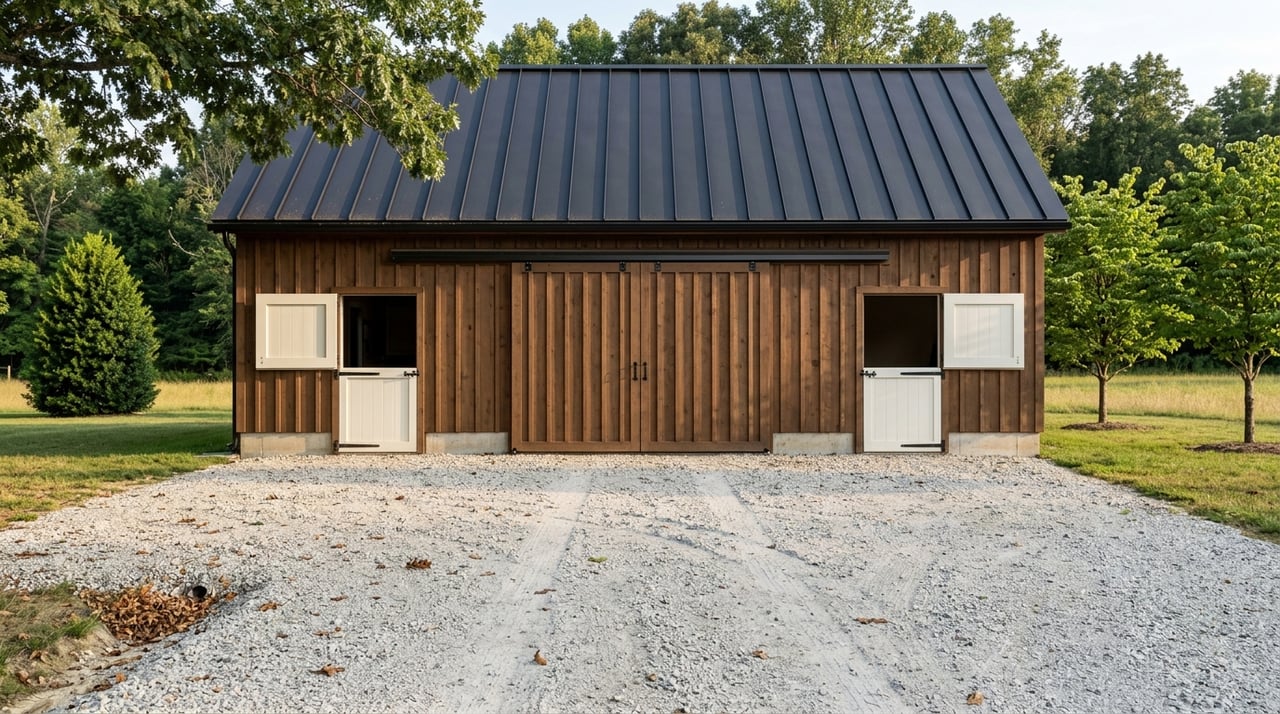
Barns, sheds, detached garages, and workshops should look like assets, not storage overflow. Buyers need to understand what each structure does, how much room it offers, and whether it appears functional.
A swept barn aisle, organized tack or storage area, cleared workshop surfaces, and working lights can make a big difference. Even simple changes can help buyers picture how they would use the space.
Try to remove excess personal items and anything that makes a structure feel crowded. NAR notes that over-personalized spaces can make it harder for buyers to picture themselves living there, and buyers expect the in-person experience to match what they saw online.
Prepare the house like part of the whole
The home still needs the same core preparation as any other listing. Cleaning, decluttering, repairing, depersonalizing, and updating key spaces can help buyers focus on the property’s potential instead of your day-to-day life.
NAR describes staging in exactly those terms, and reports that 83% of buyers’ agents say staging makes it easier for buyers to visualize a property as a future home. On acreage listings, that principle should extend from the interior all the way out to the land and support buildings.
Keep each room simple and bright. You want the home to feel like the anchor of the property, not separate from it.
Gather well and septic records early
In Laytonsville and nearby rural parts of Montgomery County, utility systems can be a major part of buyer due diligence. County guidance notes that private onsite wells and septic systems are common in lower-density suburban, rural, and agricultural areas.
If your property uses a private well or septic system, gather records before the listing goes live. Useful documents can include recent water-test results, pumping or maintenance records, service invoices, and any permits or plans related to additions or site improvements.
This is not just a nice extra. Montgomery County states that owners of private wells and septic systems are responsible for maintaining them, and the Maryland Department of the Environment says well owners should test at least annually and keep maintenance records.
Having this paperwork ready can reduce friction later. In Montgomery County, well and septic testing and permitting are handled by DPS on behalf of the Maryland Department of the Environment, so organized records can make pre-listing review and buyer questions much easier to manage.
Confirm easements and development limits
One of the biggest mistakes on acreage listings is being vague about future use. If your parcel is subject to an easement, preservation program, or another restriction, the marketing needs to describe the property accurately.
Montgomery County says some preservation programs permanently extinguish residential development rights and associated septic capacity. If that applies to your property, buyers need clear, factual information from the start.
This protects you in two ways. First, it helps attract the right buyers. Second, it lowers the chance of wasted time with buyers who are expecting a different development potential than the property actually offers.
Build a smarter marketing package
Acreage properties usually need more than standard listing photos and a short description. Buyers often need help understanding how the parcel is laid out and how the house connects to the rest of the site.
That is why visual marketing matters so much. NAR says 81% of buyers rated listing photos as the most useful feature in their online home search, while Zillow found that floor plans, high-resolution photos, and 3D or virtual tours rank as the top features buyers care about most.
For a Laytonsville acreage listing, your marketing package should aim to answer buyer questions before they ask. That can mean pairing strong photos with a floor plan, site details, and a clear written inventory of the land and improvements.
Use aerials to show the full property
Aerial photography can be especially helpful on larger parcels because it shows the relationship between the house and the land. Buyers can better understand the driveway layout, open ground, wooded areas, and where outbuildings sit in relation to one another.
Zillow notes that aerial photography helps buyers visualize a property’s location, nearby amenities, neighborhood appeal, and surrounding outdoor space. On acreage, that wider perspective often helps buyers understand value faster than ground-level photos alone.
The goal is clarity, not drama. Aerials should help buyers read the parcel and get a truthful sense of how the property is set up.
Plan the photo order carefully
The order of your photos matters more than many sellers realize. A larger property has more to show, so a random photo sequence can quickly feel repetitive or confusing.
A smart sequence starts with arrival and frontage, then moves to the land, then the outbuildings, then the home’s interior, and finally any standout views or bonus spaces. This creates a visual tour that feels natural and easy to follow.
NAR notes that photo order matters because buyers may stop scrolling when images feel repetitive. When your listing tells a clear story, buyers are more likely to stay engaged.
Keep the presentation honest
With acreage, it can be tempting to over-focus on the best angles. But the strongest listings are the ones that feel polished and accurate at the same time.
NAR warns that buyers are disappointed when the home they visit does not live up to what they saw online. That means your photos and descriptions should not hide the true spacing between structures, road proximity, slope, or other meaningful site conditions.
Honest presentation builds trust. It also helps showings go better because buyers arrive with a more realistic understanding of the property.
Anticipate buyer questions before showings
Many acreage buyers will ask similar questions early in the process. If you can answer them clearly in the listing package, you can save time and create a smoother experience.
Here are some of the most common questions to prepare for:
- How much of the acreage is usable versus wooded, buffered, or protected?
- Is the property on public water and sewer or private well and septic?
- Are there recent water-test, pumping, maintenance, or permit records?
- Which outbuildings, fences, and site improvements convey?
- Is the land subject to an easement, preservation program, or other restriction?
- Will the marketing include aerials, floor plans, or site maps?
When those answers are organized early, your property feels more credible and easier to evaluate.
A better listing starts before it goes live
Getting a Laytonsville acreage property ready to list is about more than tidying up. It is about presenting the home, land, systems, and improvements as one complete story buyers can understand and trust.
When you prepare the property carefully, gather records early, and market the acreage with clear visuals and accurate details, you give yourself a stronger path to a smoother sale. If you want a local, data-driven plan for pricing and presenting your property, connect with Robert T Dinh for guidance tailored to your Laytonsville listing.
FAQs
What should I do first before listing a Laytonsville acreage property?
- Start by defining the property’s full story, including acreage, usable land, outbuildings, utility systems, access, and any restrictions that affect how the parcel can be used.
What records should I gather for a Montgomery County acreage listing?
- Gather well and septic records, recent water-test results, maintenance invoices, pumping records, and any permits or plans related to additions, barns, or other site improvements.
Why do aerial photos matter for a Laytonsville acreage home sale?
- Aerial photos help buyers understand the layout of the land and how the house, driveway, outbuildings, and open or wooded areas relate to each other.
How should I prepare barns and sheds before listing an acreage property?
- Clean, sweep, organize, improve lighting if needed, and remove excess stored items so each structure looks functional, spacious, and easy for buyers to understand.
What should a Montgomery County acreage listing say about easements or preservation restrictions?
- The listing should describe any easements, preservation programs, or development limits accurately so buyers have a clear and factual picture of the property’s existing use and constraints.
What marketing materials matter most for a Laytonsville acreage property?
- High-resolution photos, a floor plan, 3D or virtual tour options, aerial images, and a clear written inventory of the land and improvements are all helpful for explaining the property well.